
A few years ago, I wrote about my experience in Navigating Perimenopause While Homeschooling. At that time, I was still trying to understand the many changes happening in my body and emotions. Like many women in their 40s and 50s, I found myself dealing with symptoms I never expected to experience so intensely—insomnia, anxiety, fluctuating blood pressure, fatigue, mood changes, and a general feeling that my body was no longer responding the way it used to.
The past one to two years have been a journey of learning, adjusting, and listening more closely to my body. While every woman’s experience is different, I wanted to share some of the practices that have helped me manage my symptoms and improve my overall well-being.
I am not a doctor, and these are simply personal experiences that worked for me alongside guidance from my healthcare providers. If you are experiencing severe symptoms, please consult your doctor.
One thing I learned is that perimenopause is not just about hot flashes or irregular periods. For some women, anxiety and even panic attacks can become unexpected companions during this stage of life. These can contribute to sleep disturbances, insomnia, and blood pressure fluctuations. When we don’t sleep well, everything else becomes harder to manage.
The good news is that small daily habits can make a surprisingly big difference.
My Morning Routine: Starting the Day with Prayer, Sunlight, and Movement
One of the biggest changes I made during perimenopause was becoming more intentional about how I start my mornings. I discovered that the first hour or two of the day often sets the tone for everything that follows.
As a busy mom and work-from-home professional, I learned that combining healthy habits makes them easier to sustain. Instead of treating prayer, sunlight exposure, meditation, and movement as separate activities, I often do them together.
Many mornings, I spend time praying, reflecting, or meditating while getting sunlight exposure outdoors in our al fresco area. On some days, I do gentle stretching or walking after my prayer time in the morning. If my schedule allows, I may even eat a late breakfast in our al fresco area where I can continue enjoying the morning sunlight.
By combining these habits, I am able to care for my spiritual, emotional, and physical well-being without adding more stress or complexity to my day.
Morning Prayer and Meditation
Before checking messages, social media, or my long list of responsibilities, I strive to consistently spend time in prayer and quiet reflection. This is not easy for busy moms and for people like me whose brains are always active as soon as I wake up.
Perimenopause can bring unexpected anxiety, worry, and mental restlessness. Starting the day with prayer helps ground me and reminds me that I do not have to carry every burden on my own.
This quiet time helps me approach the day with greater peace and clarity. Instead of immediately focusing on problems, deadlines, and concerns, I try to focus on gratitude, trust, and God’s presence.
Morning Sunlight Exposure
Whenever possible, I get sunlight exposure before 9:00 a.m for around 15-30 minutes daily.
Morning sunlight helps regulate the body’s circadian rhythm, which supports better sleep at night. It also helps improve mood and energy levels during the day.
Many women experiencing perimenopause struggle with sleep disturbances and insomnia. Something as simple as regular morning sunlight can help the body re-establish a healthier sleep-wake cycle.
Gentle Morning Movement
Movement is also part of my morning routine.
Depending on how I am feeling, this may include:
- Gentle stretching
- Light exercises
- Walking
I found that gentle movement helps reduce stiffness, improves circulation, boosts energy, and supports emotional well-being.
When my blood pressure was fluctuating, I focused on low-impact activities. After my blood pressure remained stable for several months, I gradually returned to one of my favorite sports: playing badminton every now and then.
The goal is not intense exercise. The goal is consistent movement that supports overall health.
Eating to Support My Health
Over the past couple of years, I became more intentional about what I eat.
Some of the dietary changes that helped me include:
- Choosing brown rice or red rice instead of white rice
- Eating less rice, especially in the evening. I try to limit my rice intake in the evening to half a cup. I try to eat 1 cup of rice only during lunch.
- Prioritizing fish, seafood, vegetables, and fruits over other meat.
- Staying away from ultraprocessed foods, fast food, and junk food as much as possible.
- Reading food labels carefully.
- Avoiding products with excessive sugar, artificial sweeteners, preservatives, and artificial coloring.
- Cooking our food and eating homecooked meals as often as we can.
When I was trying to bring my cholesterol levels back into the normal range, I avoided other meats for about two months and focused mostly on fish, seafood, vegetables, and fruits. Thankfully, this helped improve my cholesterol levels and reduced the likelihood of needing long-term maintenance medications for cholesterol or blood pressure.
Choosing Better Carbohydrates
Another significant change was reducing refined starches.
Instead of white bread for breakfast or snack, I often eat:
- Boiled purple camote (sweet potato)
- Boiled saba or plantain bananas
These are filling, nutritious, and provide a steadier source of energy compared to many processed breads and snacks.
Prioritizing Protein
For breakfast, I often choose foods that are higher in protein, such as:
- Hard-boiled eggs
- Greek yogurt (I buy less processed or homemade so that there are no preservatives.)
- Nuts
- Fresh fruits
I found that eating more protein and fewer refined carbohydrates helped me feel fuller and more energized throughout the day.
Intermittent Fasting and Avoiding Constant Snacking
I also found intermittent fasting helpful, along with avoiding unnecessary snacking.
If I really need a snack, I prioritize eating fresh fruits or food like boiled saba or camote.
Giving my digestive system regular breaks helped me become more mindful about eating and made it easier to maintain a healthy weight.
Maintaining an ideal weight became one of my priorities because excess weight can worsen many perimenopausal symptoms and increase health risks.
Limiting Sugar
I noticed that too much sugar often made me feel worse. I also learned that sugar is the real culprit to most chronic diseases and pains in the body. It contributes to inflammation.
Now I try to:
- Limit sweets
- Avoid sugary snacks and desserts especially in the afternoon or close to bedtime.
Reducing sugar intake has helped stabilize my energy levels and avoid unnecessary spikes and crashes.
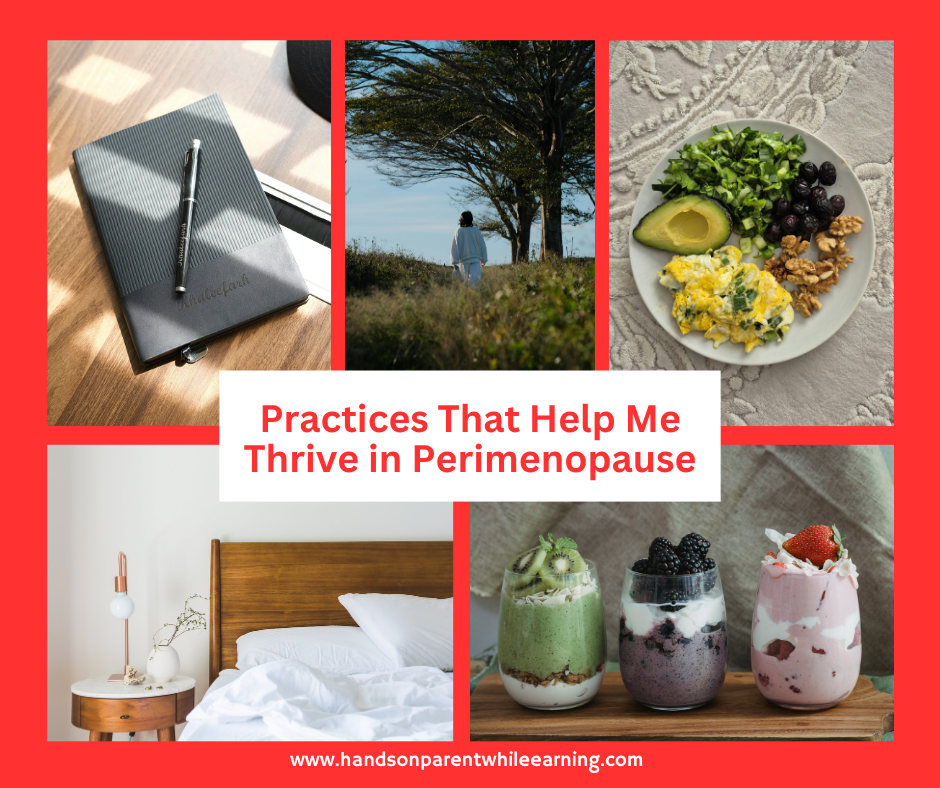
Managing Stress and Protecting My Peace
One of the most important lessons I learned was that not every problem needs my attention.
As advised by my doctors, I became more intentional about avoiding unnecessary stress, including stressful people and situations whenever possible.
This doesn’t mean avoiding responsibilities. It means recognizing that my energy and time has limits and that protecting my well-being and health is necessary.
I also learned to:
- Limit what is on my plate
- Focus on what matters most
- Let go of unnecessary obligations
- Say no when needed
As a mother, I realized that taking care of myself is not selfish.
My children still need me. Staying healthy is one of the ways I care for them.
Stretching Throughout the Day
One thing I noticed during perimenopause is that my body tends to tighten and tire more easily, especially after long hours of work, writing, computer tasks, household responsibilities, and other daily activities.
Because of this, I do not limit stretching to the morning.
Throughout the day, I take short breaks to stretch, move around, and release muscle tension. These mini-movement breaks help improve circulation, reduce stiffness, and prevent the fatigue that can build up from sitting too long.
Sometimes a few minutes of stretching can make a significant difference in how I feel physically and mentally.
Working with Doctors Who Focus on Root Causes
Another important part of my health journey has been finding healthcare providers whose approach aligns with my values and goals.
Over the years, I have gravitated toward holistic and integrative doctors who look at the whole person rather than simply treating symptoms.
I appreciate doctors who are willing to explore possible root causes of health concerns and discuss lifestyle changes that may help improve health naturally whenever appropriate.
This does not mean rejecting conventional medicine totally. There are situations where medications are necessary and life-saving. However, I appreciate healthcare professionals who do not immediately reach for a prescription pad without first helping patients understand what may be contributing to their symptoms.
For example, when dealing with issues such as elevated cholesterol, blood pressure fluctuations, sleep problems, stress, or fatigue, I wanted to understand what lifestyle factors I could improve rather than automatically becoming dependent on long-term medications if those issues could be addressed through healthier habits. For in truth, synthetic medicines have negative side effects.
Thus, I am grateful and blessed to have found doctors who encouraged me to focus on:
- Nutrition
- Sleep quality
- Stress management
- Physical activity
- Weight management
- Emotional well-being
This approach empowered me to become an active participant in my own health journey.
My Evening Routine for Better Sleep
Sleep became one of my highest priorities because I noticed that poor sleep affected everything else—my anxiety levels, mood, energy, blood pressure, and overall health.
Eat Dinner Earlier and Lighter
Whenever possible, I try to eat dinner between 6:00 p.m. and 7:30 p.m., or even earlier.
I also try to keep dinner lighter and avoid overeating at night.
A lighter evening meal seems to help me sleep more comfortably and wake up feeling better the next day.
Reduce Screen Time Before Bed
I try to avoid screens for one to two hours before bedtime.
This includes:
- Phones
- Tablets
- Laptops
- Television
The blue light from screens can interfere with melatonin production and make it harder to fall asleep.
Read a Printed Book Instead
Instead of scrolling through social media or checking emails, I often read a printed book.
Reading helps shift my attention away from worries, unfinished tasks, and mental clutter. It gives my mind permission to slow down.
Get Tomorrow Out of My Head
If I have concerns or tasks I need to remember, I write them down.
I keep a notebook or planner nearby and list my to-dos for the next day.
This simple habit prevents my brain from repeatedly reminding me of things while I am trying to sleep.
Practice Gratitude
I also write down blessings in my journal.
When anxiety starts to creep in, focusing on what is going right helps create a healthier perspective.
It does not erase problems, but it reminds me that there is still much to be thankful for.
Limit Water Before Bed
This may seem like a small thing, but it helped me.
I try to avoid drinking too much water close to bedtime and make sure to use the bathroom before sleeping. In fact, I often make it a point to urinate twice before bed if needed.
This reduces the chances of waking up in the middle of the night or during the early morning hours just to go to the bathroom.
Melatonin When Needed
One tool that has helped me during difficult periods of insomnia is a plain melatonin tablet from Watsons.
I prefer the chewable or melt-in-the-mouth versions because they are convenient and do not require water.
Of course, it is always best to consult your doctor before taking any supplement regularly.
What Changed for Me
Over the past two years, I have seen meaningful improvements in my health and overall quality of life.
While every woman’s experience with perimenopause is different, and I cannot guarantee the same results for others, these practices have made a significant difference for me.
Some of the positive changes I experienced include:
- Maintaining normal blood pressure without needing maintenance medication
- Sleeping better most nights, typically getting seven to eight hours of sleep
- Maintaining my ideal weight
- Having less frequent anxiety episodes and panic attacks
- Less frequent body aches
- Seeing my blood test results return to normal ranges
- Having more stable energy levels throughout the day
- Less cravings
- Enjoying a better mood and greater emotional balance
- Feeling more at peace, with less stress and drama in my life
- Feeling healthier, stronger, and more capable of handling daily responsibilities
Perhaps most importantly, better health allowed me to continue pursuing the things that matter most to me.
I was able to continue working from home, support my family in our homeschooling journey, remain active in ministry work, pursue personal goals, and be more present for the people I love.
Last year and this year, a few of the significant things that I got to do for myself is to go on retreats and join the Cardinal Sin Catholic Book Awards again. Thankfully, by the grace of God, I got to attend the awarding ceremony last year and I won again for the 4th time. I also finished a new book this year. This is my 12th book.
Perimenopause can sometimes make us feel as if life is shrinking. In my case, improving my health helped life feel bigger again. It gave me the energy, clarity, and peace of mind to continue serving God, caring for my family, and pursuing the work and causes that are important to me.
My Biggest Takeaway
Looking back, the biggest lesson perimenopause has taught me is that health is built through daily habits.
Prayer, sunlight, movement, nourishing food, quality sleep, stress reduction, and supportive healthcare providers may seem like small things on their own. But together, they have helped me navigate this season with greater peace, better health, and renewed hope.
Perimenopause is not the end of vitality. It is simply a new chapter that invites us to care for ourselves more intentionally than ever before.
If you are currently navigating perimenopause, know that you are not alone. Be patient with yourself. Listen to your body. Protect your peace. Nourish yourself well. Rest when needed. Seek wise medical guidance. And remember that small, consistent habits often produce the biggest long-term results.
Most importantly, caring for yourself is not selfish—it is necessary. Your health matters, and the people who love you need you healthy, too.
Good health is not just about living longer. It allows us to love, serve, work, create, and care for others more fully. For me, that has been one of the greatest gifts of this season of learning to care for myself better.






Leave a Reply
Your email is safe with us.